
 Packaging in East Africa Is Being Redefined—Here Are the Trends Driving It
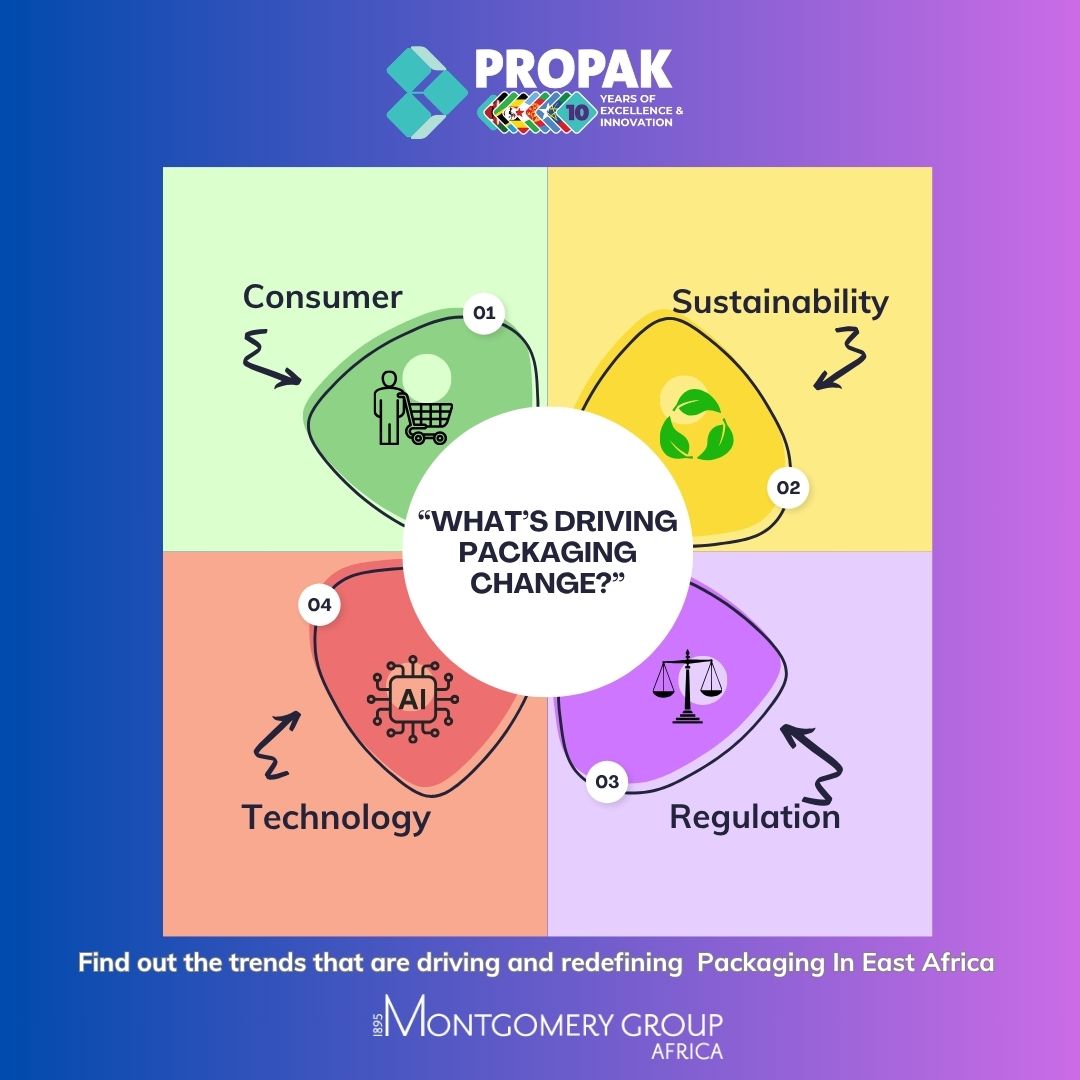
Packaging in East Africa is undergoing a significant transformation—from a traditional, linear model to a more sustainable, circular, and technology-driven system. This shift is being shaped by multiple forces, including sustainability pressures, evolving consumer behavior, regulatory changes, and rapid technological advancement. What was once a cost-driven function is now becoming a strategic tool for how businesses compete, communicate, and operate responsibly.
At ProPak East Africa 2026, industry leaders shared perspectives that reflect these changes. Among them, Enock Okoth Abiria highlighted key developments in materials, recycling, and production technologies, pointing to a broader shift already taking place across the region.
What emerges is not a single trend, but a convergence of forces redefining packaging in East Africa.
1. A Shift Toward Sustainable Material Design
One of the most significant shifts in the packaging industry is the move toward materials designed with sustainability in mind. Traditionally, packaging relied on multi-layer laminates—combinations of different materials bonded together for strength and durability—but these structures are difficult to recycle due to their complexity.
Today, advances in material science are enabling a transition toward monomaterials—single-material packaging solutions that can deliver similar or even superior performance. Materials such as high-performance polymers allow manufacturers to maintain strength while reducing thickness and improving recyclability.
Globally, companies such as Nestlé,, Unilever, and Amcor are leading this transition through recyclable mono-material packaging solutions. According to the Ellen MacArthur Foundation, flexible packaging remains one of the fastest-growing formats globally but has low recycling rates due to its multi-layer structure, making it a key focus for innovation.
This shift aligns with tightening global regulations. In the European Union, packaging is expected to be reusable or recyclable by 2030 under the Circular Economy Action Plan and proposed PPWR.
In East Africa, adoption is still emerging but gaining momentum. Companies such as Techpak Industries are already producing recyclable single-material solutions like food containers and produce trays, while manufacturers like Bidco Africa are integrating more sustainable packaging approaches across their product lines.
The implication is clear: packaging is no longer just about protection—it is about designing for the entire lifecycle, from production to reuse or recycling.
2. Circularity Is Moving from Concept to Practice
Alongside material innovation, there is a growing emphasis on circularity—keeping packaging in use for as long as possible through reuse, recycling, and reintegration into production systems.
This is reflected in simpler material structures such as PE-to-PE and PP-to-PP laminates, as well as the gradual use of post-consumer recycled materials like rPET and recycled HDPE. While still developing—particularly in flexible packaging—these approaches are enabling more practical and scalable circular systems.
In East Africa, circularity is supported by a broader ecosystem that includes producer responsibility organizations, waste aggregators, recyclers, and informal collectors. These actors work together under frameworks such as Kenya’s Extended Producer Responsibility (EPR).
Organizations like T3 Kenya help bridge the gap by collecting and sorting waste and channeling materials back into the value chain, often working closely with communities. Across cities like Nairobi, structured systems linking recyclers and aggregators are improving material recovery.
Companies such as Mr. Green Africa are already supplying recycled plastics back to manufacturers, reinforcing a system where waste becomes a resource. This integration of formal and informal systems makes East Africa’s circular model both practical and adaptable.
3. Regulation Is Accelerating Industry Change
Policy and legislation continue to shape packaging practices across East Africa. Kenya’s 2017 ban on polyethylene carrier bags remains one of the most visible examples of how regulation can drive rapid industry adaptation.
Rwanda took a similar approach earlier, implementing a plastic bag ban in 2008 and expanding it in 2019 to cover more single-use plastics. These policies have set the tone for environmental regulation across the region.
In response, businesses have shifted toward alternatives such as woven polypropylene bags and compostable options, with retailers like adopting such solutions. Suppliers like Skyland Masterbatch are supporting this transition through additives that accelerate plastic degradation, offering a transitional pathway toward sustainability.
Regulation is also shaping technical standards. In markets such as Ethiopia, plastic bags below 30 microns have been banned (https://www.packlab.gr/en/packaging-regulations-in-africa-2025-updates/). Similar discussions are influencing policy across the East African Community.
At the same time, frameworks such as Extended Producer Responsibility are gaining traction. Kenya’s Sustainable Waste Management Act (2024) requires producers to take responsibility for the full lifecycle of their packaging (https://www.packlab.gr/en/packaging-regulations-in-africa-2025-updates/).
Across the region, policies targeting single-use plastics signal a coordinated shift toward stricter environmental controls (https://unctad.org/system/files/non-official-document/ditc-ted-12042023-Single_Use_Plastics_Report_2023-3.pdf).
4. E-commerce and Urban Lifestyles Are Driving Demand
Another major force reshaping packaging is the rapid growth of e-commerce and on-demand consumption, driven by a younger, urban population with increasing purchasing power. Today’s consumers prioritize convenience and experience, pushing companies to adapt packaging accordingly.
As urban consumers embrace “on-the-go” living, demand for packaging that supports delivery, portability, and product integrity has increased. This is particularly evident in food packaging, where solutions such as leak-proof containers, clamshell packs, insulated delivery bags, and tamper-evident seals are becoming standard.
Platforms such as Glovo, Uber Eats, and Jumia have accelerated this shift by requiring packaging that can withstand longer delivery times and multiple handling points. As a result, businesses are prioritizing packaging that is durable, lightweight, and visually appealing.
Restaurants and food brands—including Java House and Pizza Inn—now treat packaging as an extension of their brand, using it to preserve quality while reinforcing identity.
At the same time, consumer behavior is influencing packaging aesthetics. A digitally active population values packaging that is visually appealing and shareable, making packaging part of the overall product experience.
5. Customization and Digital Printing Are Opening New Possibilities
Advances in digital printing are transforming how packaging is produced and who can access it. Unlike traditional methods that require large volumes, digital solutions allow for short runs, sometimes as few as 50–100 units.
This shift enables SMEs and startups to access customized packaging without large upfront costs and respond quickly to market trends.
Digital printing also supports limited-edition packaging, seasonal campaigns, and short-term product launches, allowing brands to create targeted packaging without overproduction.
As a result, packaging is becoming a powerful tool for branding and differentiation, helping businesses connect more directly with consumers.
6. Technology and AI Are Beginning to Influence the Industry
The integration of digital tools and artificial intelligence into packaging is still emerging but gaining traction. These technologies are improving design efficiency, production processes, and sustainability outcomes.
Globally, companies such as Amcor and Unilever are using digital tools to optimize packaging design and reduce material use. Platforms like Adobe and Esko are enabling faster prototyping and more efficient workflows.
Digital workflows are already reducing lead times and increasing flexibility, particularly in digital printing environments.
Looking ahead, AI is expected to support material selection, waste reduction, demand forecasting, and supply chain optimization. While adoption in East Africa is still limited, these technologies point toward a smarter and more responsive packaging ecosystem.
7. Challenges and Opportunities
These trends point to an industry that is evolving rapidly and aligning with global sustainability goals.
However, challenges remain. Recycling infrastructure is still developing, particularly for flexible packaging, and sustainable materials can be costly for many businesses. Regulatory frameworks also vary across the region.
At the same time, these challenges present opportunities. Companies that invest early in sustainable design, circular systems, and digital capabilities are likely to gain a competitive advantage as the market matures.
Conclusion
The future of packaging in East Africa is no longer defined solely by cost or functionality. It is being shaped by sustainability, technology, policy, and evolving consumer expectations.
As these forces converge, packaging will play an increasingly strategic role—not just in protecting products, but in enabling businesses to adapt and compete.
The transformation is already underway. The question now is how quickly the rest of the industry can keep pace.
References
https://www.nestle.com/sustainability/waste-reduction/packaging https://www.unilever.com/sustainability/plastics/ https://www.amcor.com/sustainability/products https://www.ellenmacarthurfoundation.org/tackling-flexible-plastic-packaging-waste https://content.ellenmacarthurfoundation.org/m/2191630714e1d65e/original/Flexible-packaging-Executive-summary.pdf https://environment.ec.europa.eu/strategy/circular-economy-action-plan_en https://environment.ec.europa.eu/topics/waste-and-recycling/packaging-waste_en
https://www.packlab.gr/en/packaging-regulations-in-africa-2025-updates/ https://unctad.org/system/files/non-official-document/ditc-ted-12042023-Single_Use_Plastics_Report_2023-3.pdf https://techpakindustries.com/services/multi-purpose-containers/
https://techpakindustries.com/services/punnets-and-trays/ https://www.bidcoafrica.com/sustainability/ https://www.mrgreenafrica.com/